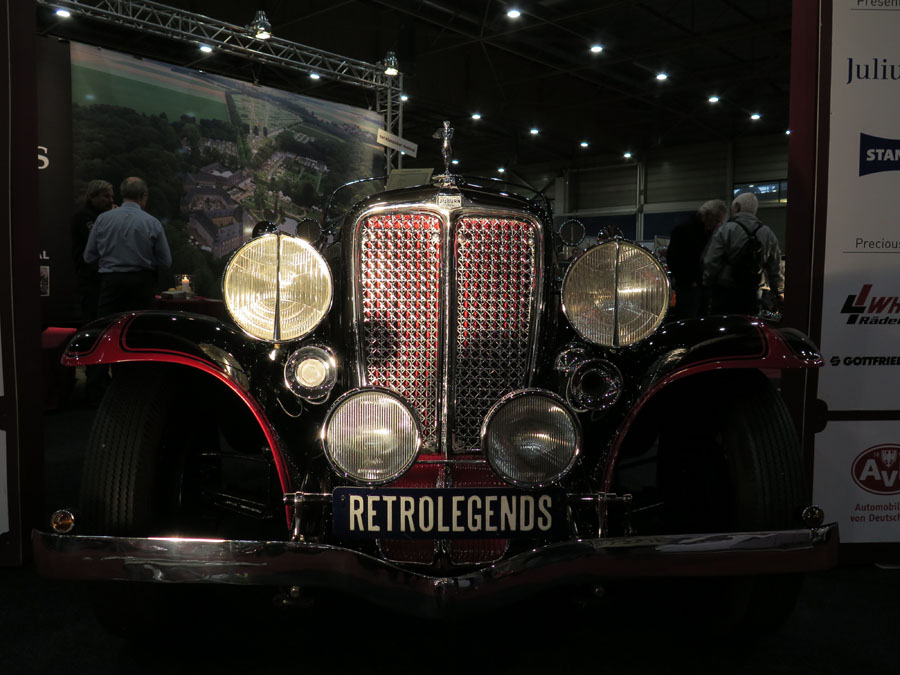
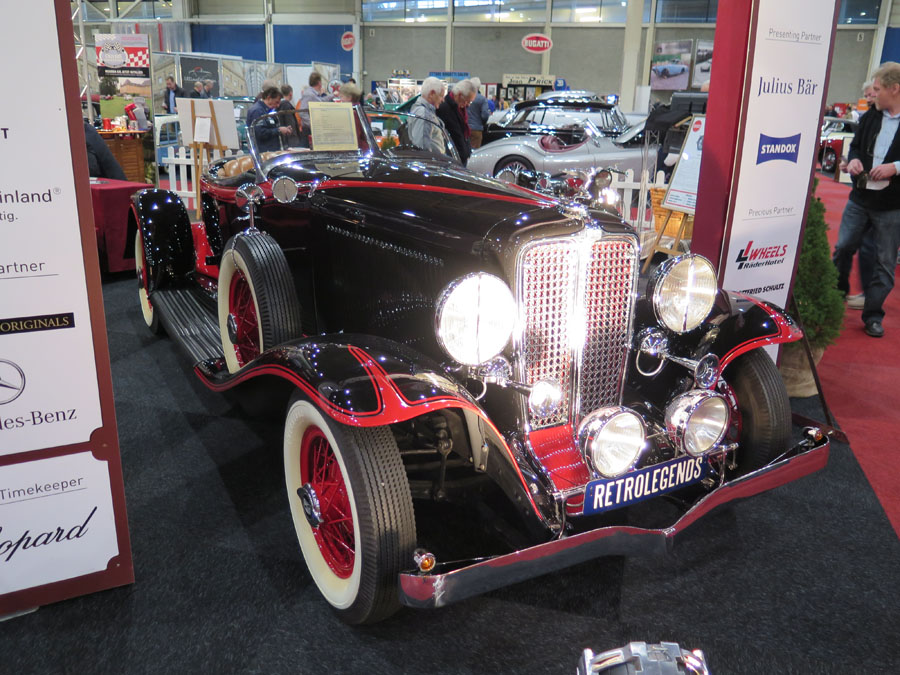
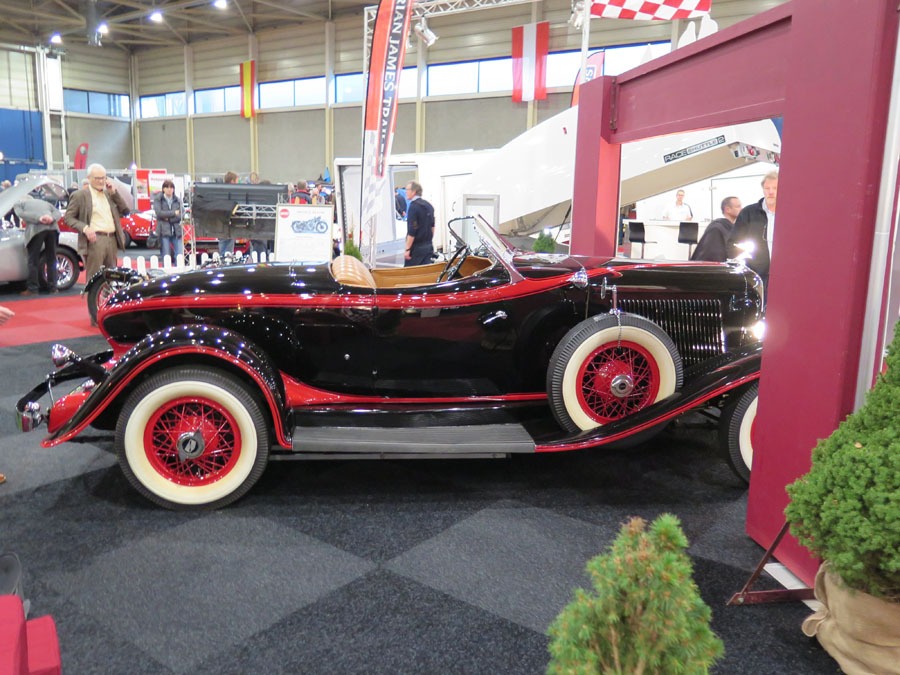
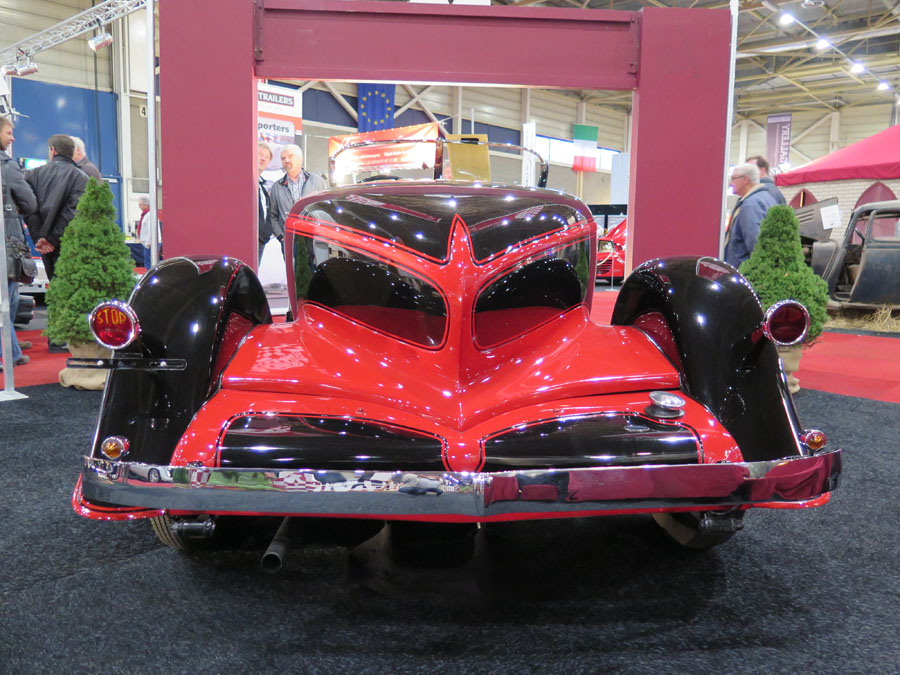
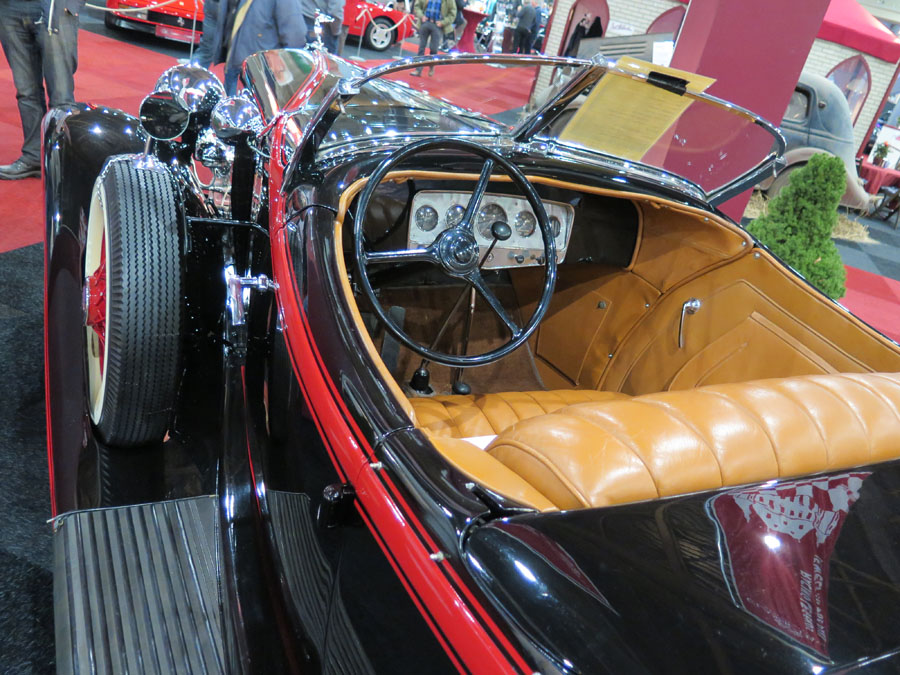
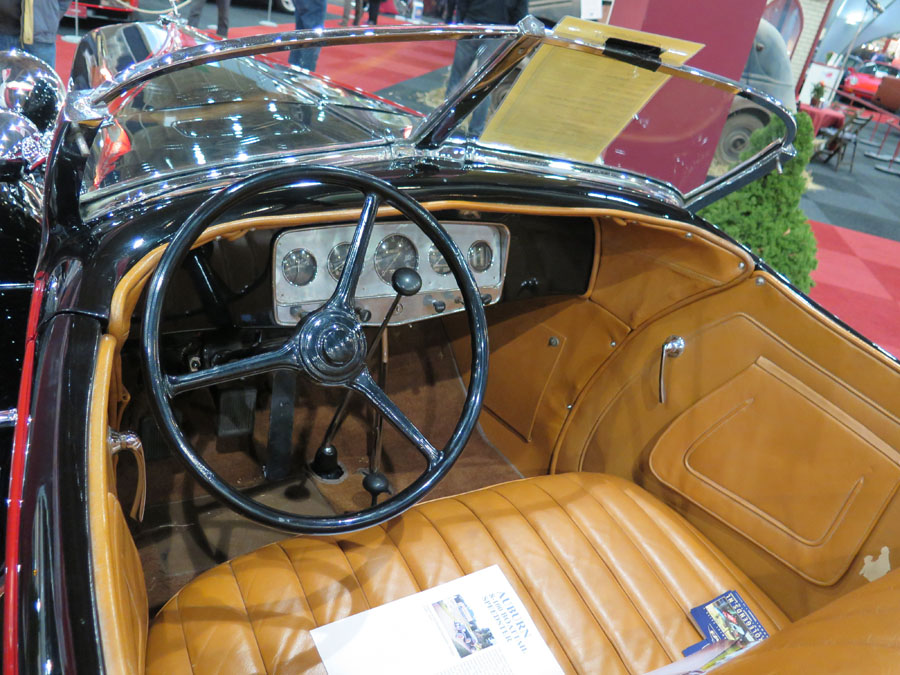
| Make and car model | Auburn 8/100 Boattail Speedster |
| Production year | 1931 |
| Body type | Boattail Speedster |
| Number of doors | 2 |
| Exterior colour | black-red |
| Interior colour | cognac |
| Fuel | petrol |
| Displacement (ccm) | 4405 |
| Number of cylinders | line 8 |
| Engine power (PS at rpm) | 98 at unknown |
| Top speed (km/h) | unknown |
| Acceleration 0-100 km/h (sec.) | unknown |
| Gearbox type | manual, 3-speed |
| Fuel consumption, combined driving (l/100 km) | unknown |
| Mileage | unknown |
| Number of produced copies | 14 copies of model Boattail Speedster in 1931 |
| Price (€) | 120 000 |
The Auburn Automobile Company (1900-1936) grew out of the Eckhart Carriage Company, founded in Auburn, Indiana in 1874 by Charles Eckhart (1841–1915). Eckhart's sons, Frank and Morris, experimented making automobiles before moving into a larger plant in 1909. In 1919, the Eckhart brothers sold the company to Ralph Austin Bard (1884-1975), who later served as Assistant Secretary and as Undersecretary of the Navy for President Franklin Delano Roosevelt (1882-1945), and for President Harry S. Truman (1884-1972). The new owners revived the business but failed to realize their anticipated profits and in 1924, approached Errett Lobban Cord (1894–1974), a highly successful automobile salesman, with an offer to run the company. Cord aggressively marketed the company's unsold inventory and completed his buyout before the end of 1925. But styling and engineering failed to overcome the fact that Cord's vehicles were too expensive for the Depression-era market. Cord sold his shares in his automobile holding company. In 1937, production of Auburns, along with that of Cords and Duesenbergs, ended.

