
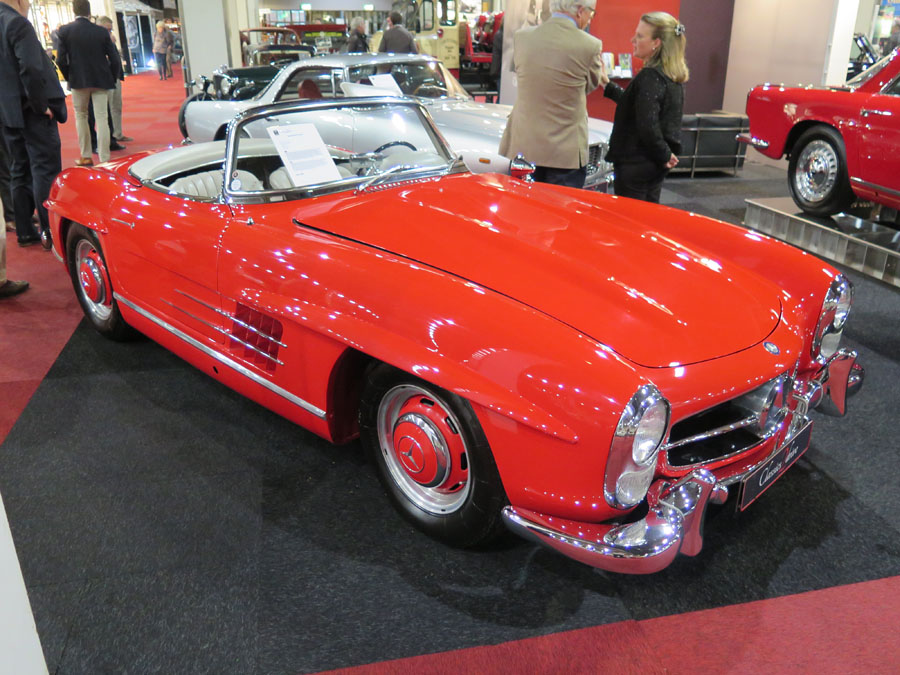
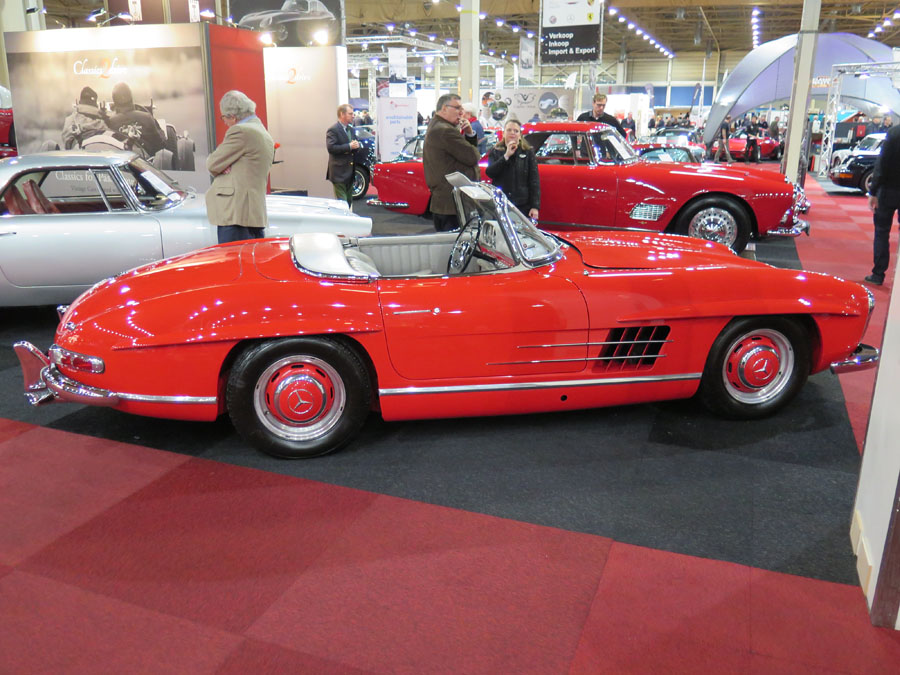
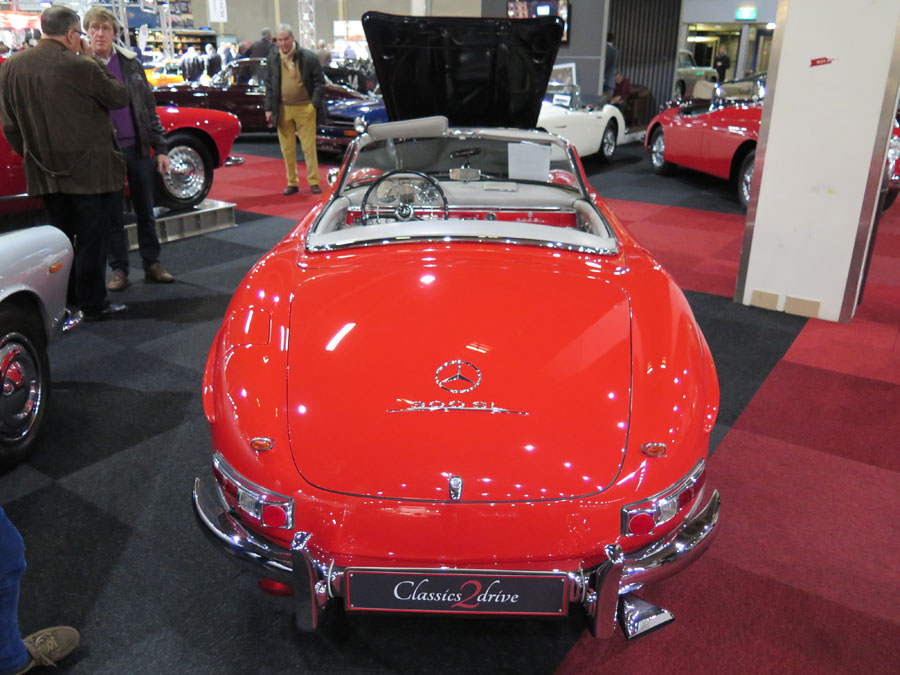
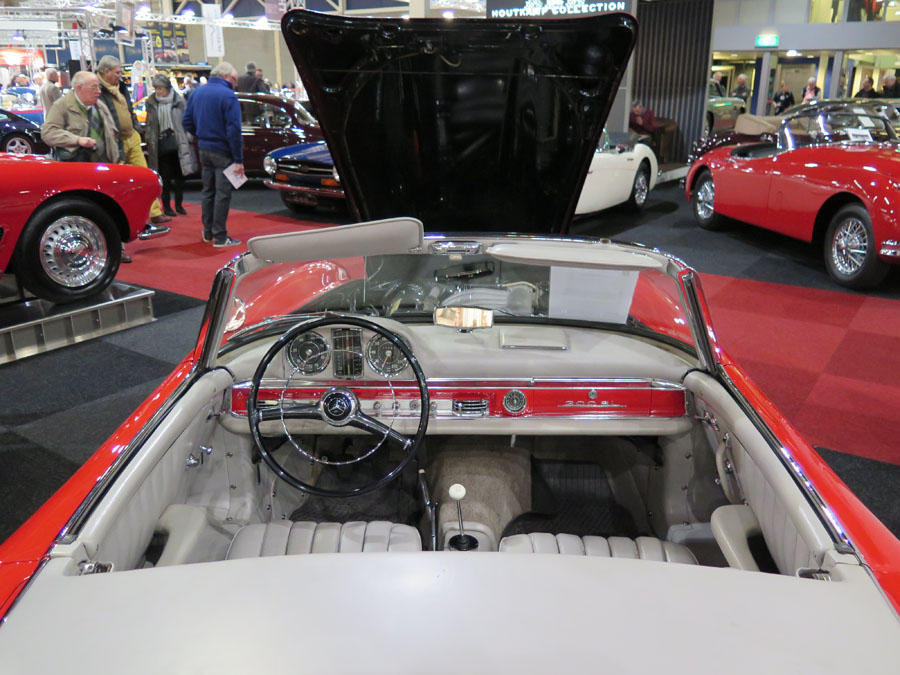
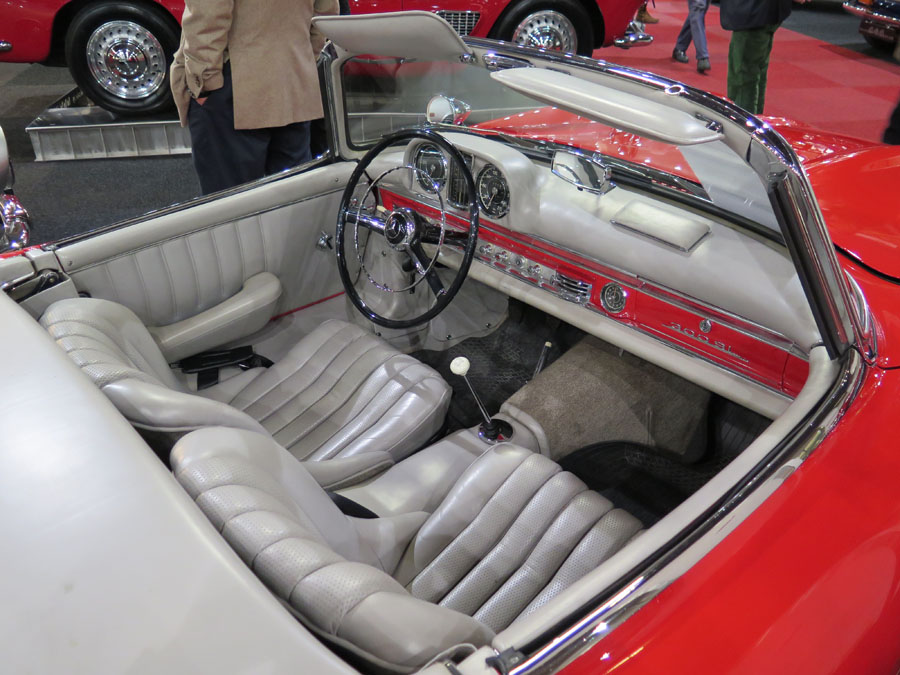
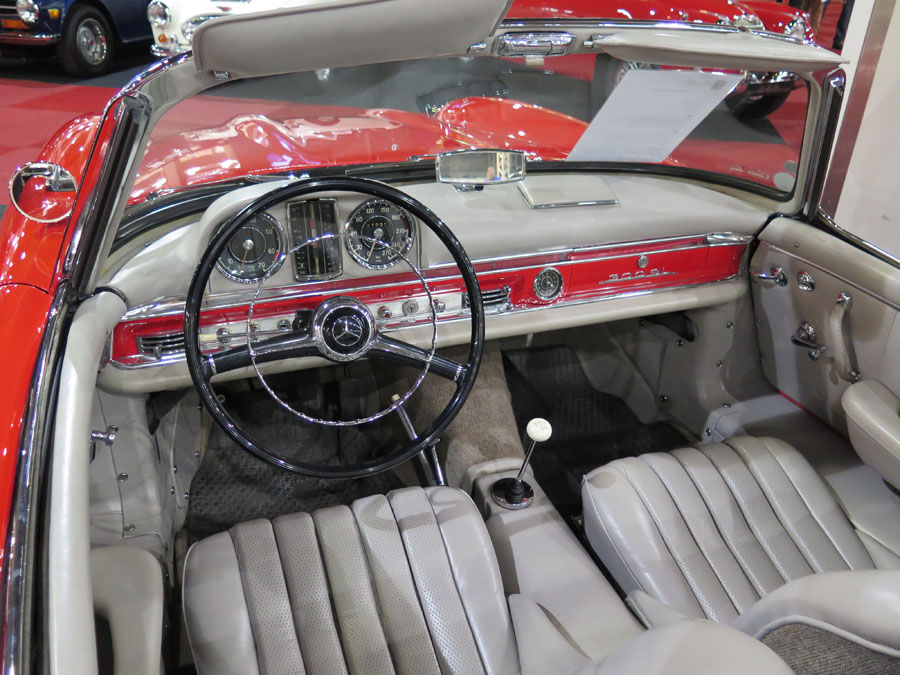
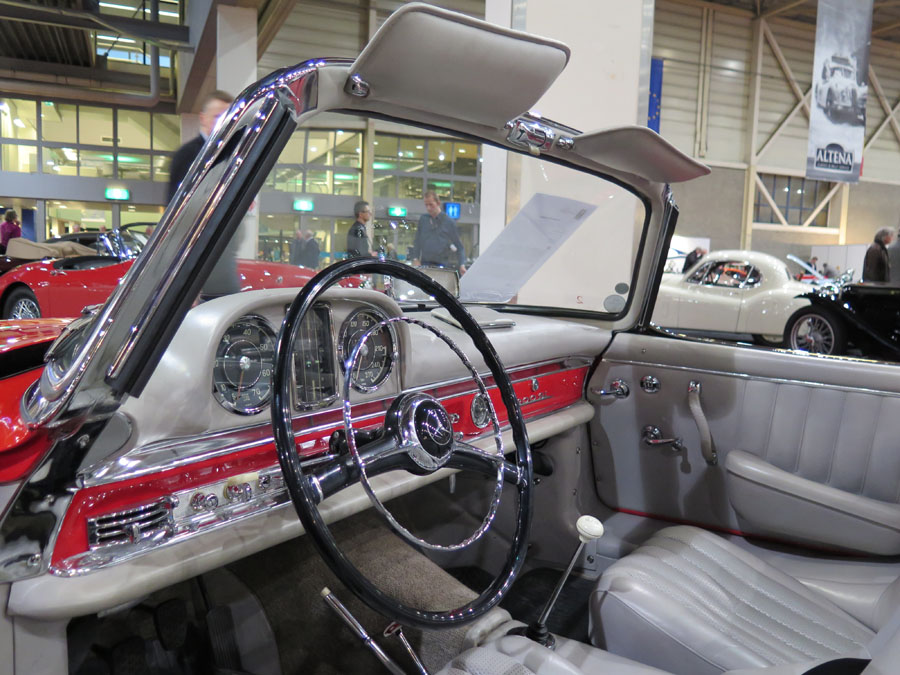
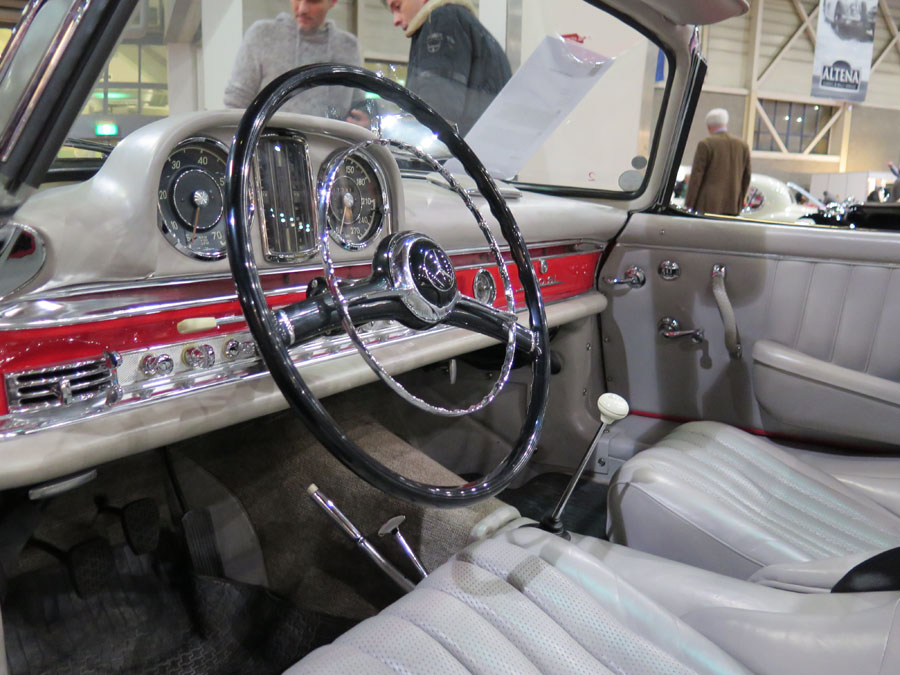
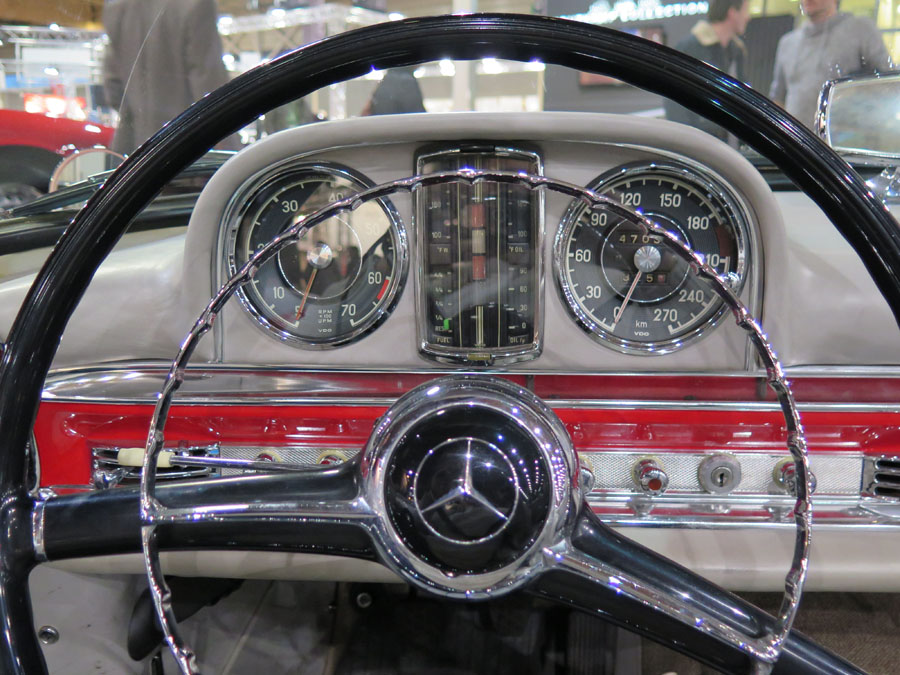
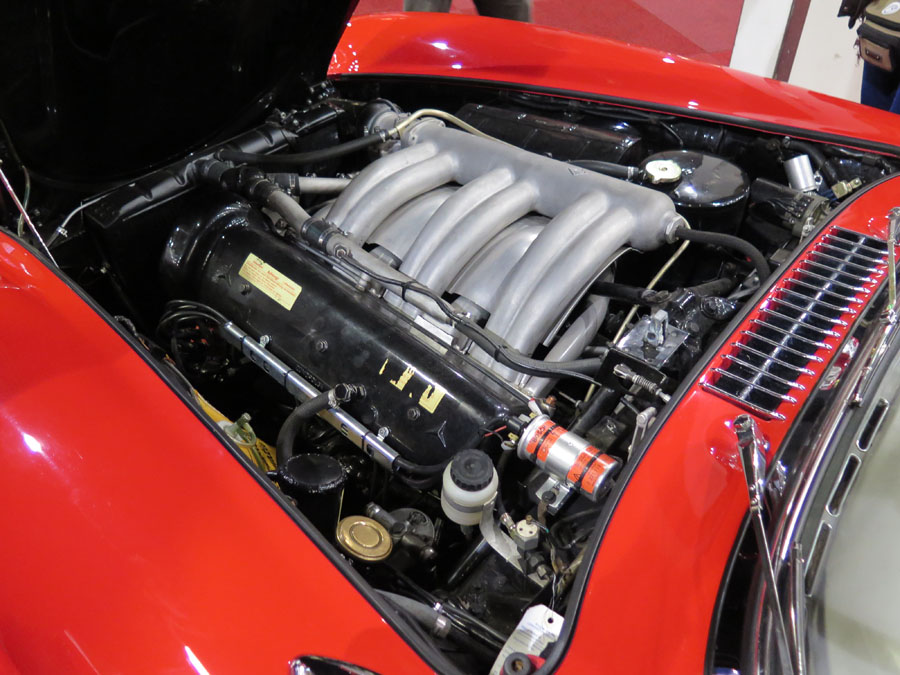
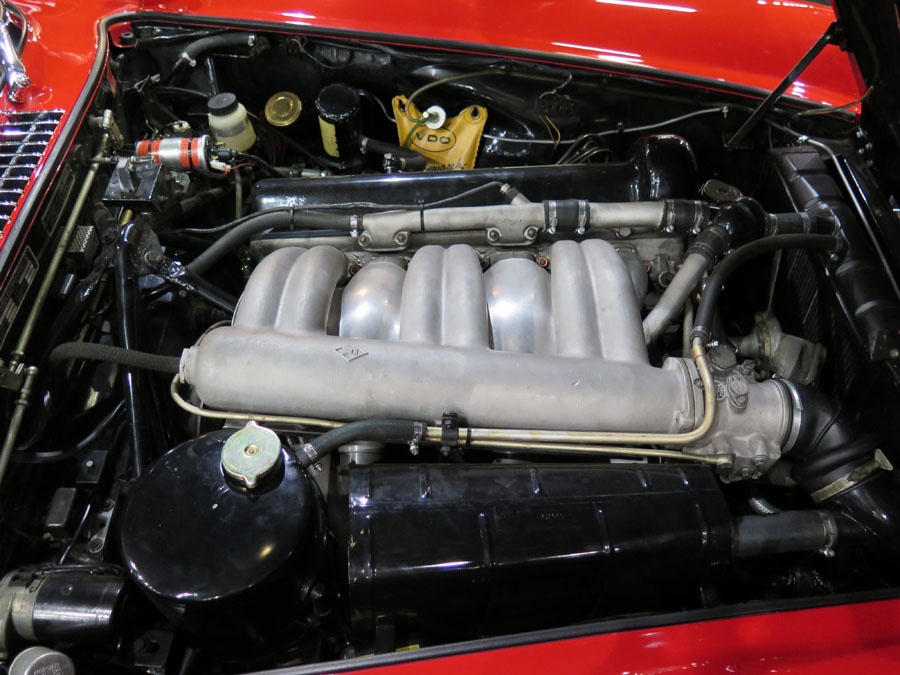
| Make and car model | Mercedes-Benz W 198 II 300 SL Cabriolet |
| Production year | 1960 |
| Body type | Cabriolet, 2-seats |
| Number of doors | 2 |
| Exterior colour | red |
| Interior colour | light gray |
| Fuel | petrol |
| Displacement (ccm) | 2996 |
| Number of cylinders | line 6 |
| Engine power (PS at rpm) | 215 at 5800 |
| Top speed (km/h) | 250 (factory data) |
| Acceleration 0-100 km/h (sec.) | 7,6 |
| Gearbox type | manual, 4-speed |
| Fuel consumption, combined driving (l/100 km) | 18,0 (factory data) |
| Mileage | unknown |
| Number of produced copies | 3 258 copies of model W 198 300 SL from 1954 to 1963, of which 1 858 copies of model W 198 II 300 SL Cabriolet from 1957 to 1963 |
| Price (€) | 1 400 000-Sold |
Company Mercedes-Benz traces its origins to Karl Benz's creation of the first petrol-powered car, the Benz Patent Motorwagen, financed by Bertha Benz and patented in 1886, and Gottlieb Daimler and engineer Wilhelm Maybach's conversion of a stagecoach by the addition of a petrol engine later that year. Karl Friedrich Benz (1844-1929) was a German engine designer and engineer, generally regarded as the inventor of the first automobile powered by an internal combustion engine, and together with Bertha Benz, pioneering founder of the automobile manufacturer Mercedes-Benz. The Benz Patent Motorwagen (or motorcar), built in 1886, is widely regarded as the world's first automobile. Bertha Benz (1849-1944) was a German automotive pioneer. She was the wife and business partner of automobile inventor Karl Benz. In 1886, she was the first person to drive an automobile over a long distance. In doing so, she brought the Benz Patent-Motorwagen worldwide attention and got the company its first sales. Gottlieb Wilhelm Daimler (1834-1900) was an engineer, industrial designer and industrialist. He was a pioneer of internal-combustion engines and automobile development. He invented the high-speed petrol engine. Wilhelm Maybach (1846-1929) was an early German engine designer and industrialist. During the 1890s he was hailed in France, then the world centre for car production, as the "King of constructors". The Mercedes automobile was first marketed in 1901 by Daimler-Motoren-Gesellschaft. Wilhelm Maybach, who worked for Daimler-Motoren-Gesellschaft, got the order in 1900 to make 36 cars for Emil Jelinek, who named 1902 those cars after his daughter, Mercedes. Emil Jellinek, known after 1903 as Emil Jellinek-Mercedes (1853-1918) was an Austrian diplomat based in Nice, France, who ran a profitable business selling cars, and, as a racing enthusiast, had been racing DMG automobiles under the pseudonym Mercedes, after his daughter, Mercedes Jellinek. The first Mercedes-Benz brand name vehicles were produced in 1926, following the merger of Karl Benz's and Gottlieb Daimler's companies into the Daimler-Benz company.

